Dive Log
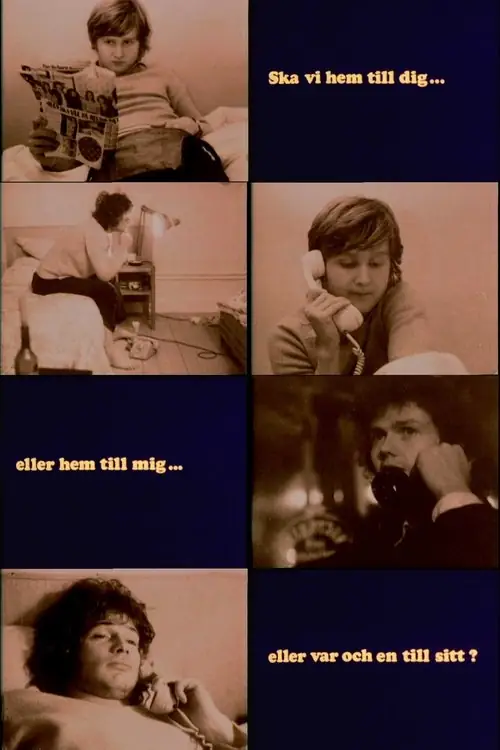
Bearing a title that reads as both proposition and existential question, this Scandinavian chamber work dissects the mating rituals of young adulthood with an anthropologist's eye for behavioral pattern and a poet's sensitivity to the pathos that lurks beneath the pursuit of physical intimacy. The premise is disarmingly simple — three companions in the uncertain territory of their twenties resolve to spend an evening in pursuit of erotic encounter — yet from this slender narrative spine the director spins a rich observational tapestry that illuminates the elaborate choreography of desire, the fragile performances of confidence that disguise desperation, and the particular loneliness that afflicts those who seek connection through the impersonal machinery of nightlife. The nightclub itself is rendered as a liminal zone where social hierarchies are both suspended and brutally enforced: the dance floor becomes an arena of acceptance and rejection, the bar a site of negotiation between aspiration and availability, and the music a sonic architecture that simultaneously facilitates and obstructs the possibility of genuine exchange. Each of the three protagonists embodies a different position on the spectrum of romantic competence: one navigates the terrain with instinctive ease, another achieves connection through perseverance, and the third — the film's most achingly drawn figure — encounters a wall of refusal that transforms the evening from adventure into ordeal. His repeated rebuffs are staged with a formal precision that avoids cruelty while refusing to soften the cumulative weight of dismissal: each woman's refusal to accept his invitation to dance accrues upon the last, building toward an emotional totality that the film neither mocks nor sentimentalizes. When the companions eventually depart with partners, the narrative fractures to follow the divergent trajectories of their respective evenings, and it is here that the work's thematic ambition becomes fully apparent — each coupling reveals a different negotiation between expectation and reality, between the fantasy that propelled the evening's quest and the compromised satisfactions that actual encounters provide. The morning-after sequences possess a chiaroscuro melancholy, the harsh light of day exposing what the nightclub's flattering dimness had concealed. Visual grammar shifts register between the communal euphoria of the club and the private awkwardness of the bedroom, the camera adjusting its distance and temperature to match each environment's emotional coordinates. The cumulative portrait is one of desire as social practice — codified, competitive, and ultimately insufficient to the deeper hunger it attempts to address.
Bearing a title that reads as both proposition and existential question, this Scandinavian chamber work dissects the mating rituals of young adulthood with an anthropologist's eye for behavioral pattern and a poet's sensitivity to the pathos that lurks beneath the pursuit of physical intimacy. The premise is disarmingly simple — three companions in the uncertain territory of their twenties resolve to spend an evening in pursuit of erotic encounter — yet from this slender narrative spine the director spins a rich observational tapestry that illuminates the elaborate choreography of desire, the fragile performances of confidence that disguise desperation, and the particular loneliness that afflicts those who seek connection through the impersonal machinery of nightlife. The nightclub itself is rendered as a liminal zone where social hierarchies are both suspended and brutally enforced: the dance floor becomes an arena of acceptance and rejection, the bar a site of negotiation between aspiration and availability, and the music a sonic architecture that simultaneously facilitates and obstructs the possibility of genuine exchange. Each of the three protagonists embodies a different position on the spectrum of romantic competence: one navigates the terrain with instinctive ease, another achieves connection through perseverance, and the third — the film's most achingly drawn figure — encounters a wall of refusal that transforms the evening from adventure into ordeal. His repeated rebuffs are staged with a formal precision that avoids cruelty while refusing to soften the cumulative weight of dismissal: each woman's refusal to accept his invitation to dance accrues upon the last, building toward an emotional totality that the film neither mocks nor sentimentalizes. When the companions eventually depart with partners, the narrative fractures to follow the divergent trajectories of their respective evenings, and it is here that the work's thematic ambition becomes fully apparent — each coupling reveals a different negotiation between expectation and reality, between the fantasy that propelled the evening's quest and the compromised satisfactions that actual encounters provide. The morning-after sequences possess a chiaroscuro melancholy, the harsh light of day exposing what the nightclub's flattering dimness had concealed. Visual grammar shifts register between the communal euphoria of the club and the private awkwardness of the bedroom, the camera adjusting its distance and temperature to match each environment's emotional coordinates. The cumulative portrait is one of desire as social practice — codified, competitive, and ultimately insufficient to the deeper hunger it attempts to address.
— Diver's log, recovered 1935, pressure index 79