Dive Log
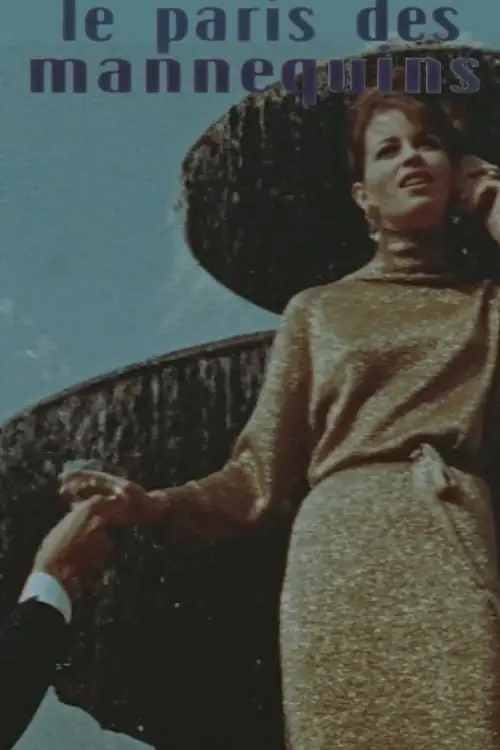
Perched atop the zinc-covered rooftops of the French capital and threading through its cobblestoned arteries below, this visually ravishing documentary-adjacent work captures the peculiar alchemy that occurs when the artifice of fashion collides with the unprepared gaze of a city's residents. Models pose against chimney stacks and mansard windows, their elongated silhouettes cutting forms against the Haussmannian skyline that no architectural intention ever anticipated. The camera registers not only the composed elegance of the subjects but also the spontaneous theater of spectatorship that surrounds them — neighbors leaning from casement windows, shopkeepers pausing mid-transaction, children pointing with the unself-conscious directness that only the very young possess. These reactions constitute the film's true subject: the disruption that beauty, or at least the industrial production of beauty, introduces into the rhythm of quotidian life. The director demonstrates a documentarian's instinct for the revealing aside, allowing the audience to watch the watchers and thereby constructing a nested series of gazes — the photographer regarding the model, the model performing for the lens, the citizen observing the spectacle, and the recording apparatus capturing all of these concentric circles of attention simultaneously. Paris functions here not as mere backdrop but as active collaborator, its particular quality of light — that celebrated grey-silver luminescence that has attracted painters for centuries — inflecting every frame with a tonal value that no studio environment could replicate. The rooftop sequences possess a vertiginous poetry, the models balanced between the domestic and the aerial, their finery incongruous against the utilitarian geometry of water tanks and ventilator shafts. When the action descends to street level, the register shifts: the fantastical encounters the logistical, and the resulting friction between glamour and municipal routine generates its own species of visual comedy. Sound design emphasizes the discontinuity — the clatter of shutter releases and the murmur of direction collide with street noise, accordion fragments, and the particular acoustic signature of a city that has been photographed so often that it has developed a reflexive relationship with the camera's presence. The cumulative effect is a meditation on the performance of elegance and the city's reluctant but ultimately complicit role as stage.
Perched atop the zinc-covered rooftops of the French capital and threading through its cobblestoned arteries below, this visually ravishing documentary-adjacent work captures the peculiar alchemy that occurs when the artifice of fashion collides with the unprepared gaze of a city's residents. Models pose against chimney stacks and mansard windows, their elongated silhouettes cutting forms against the Haussmannian skyline that no architectural intention ever anticipated. The camera registers not only the composed elegance of the subjects but also the spontaneous theater of spectatorship that surrounds them — neighbors leaning from casement windows, shopkeepers pausing mid-transaction, children pointing with the unself-conscious directness that only the very young possess. These reactions constitute the film's true subject: the disruption that beauty, or at least the industrial production of beauty, introduces into the rhythm of quotidian life. The director demonstrates a documentarian's instinct for the revealing aside, allowing the audience to watch the watchers and thereby constructing a nested series of gazes — the photographer regarding the model, the model performing for the lens, the citizen observing the spectacle, and the recording apparatus capturing all of these concentric circles of attention simultaneously. Paris functions here not as mere backdrop but as active collaborator, its particular quality of light — that celebrated grey-silver luminescence that has attracted painters for centuries — inflecting every frame with a tonal value that no studio environment could replicate. The rooftop sequences possess a vertiginous poetry, the models balanced between the domestic and the aerial, their finery incongruous against the utilitarian geometry of water tanks and ventilator shafts. When the action descends to street level, the register shifts: the fantastical encounters the logistical, and the resulting friction between glamour and municipal routine generates its own species of visual comedy. Sound design emphasizes the discontinuity — the clatter of shutter releases and the murmur of direction collide with street noise, accordion fragments, and the particular acoustic signature of a city that has been photographed so often that it has developed a reflexive relationship with the camera's presence. The cumulative effect is a meditation on the performance of elegance and the city's reluctant but ultimately complicit role as stage.
— Diver's log, recovered 1934, pressure index 53