Dive Log
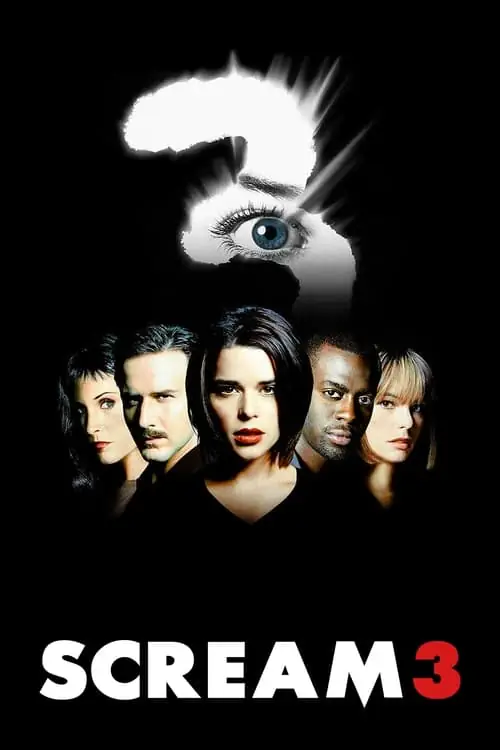
Relocating its metafictional hall of mirrors from provincial suburbia to the dream factory itself, this third installment in the landmark slasher cycle completes the franchise's migration from genre critique to industry exposé. The carnage now unfolds on soundstages and backlots, amidst the very apparatus that transforms real violence into profitable spectacle — a setting that transforms every practical effect into a double entendre and every scream into a commentary on the economics of terror. The filmmakers construct their narrative around a film-within-a-film conceit that collapses the distance between representation and reality with calculated recklessness: actors portraying victims of actual murders find themselves stalked by an assailant whose costume deliberately mirrors the one worn by their fictional counterpart, and the resulting ontological confusion infects every frame with a queasy, self-reflexive wit. The protagonist, having sought refuge in anonymity and isolation, is dragged back into the cycle not by circumstance but by the gravitational pull of a narrative that refuses her the luxury of recovery — the franchise's own continuation demands her suffering, and this self-awareness about the cruelty of serialization constitutes the work's most trenchant insight. Hollywood functions here as both setting and subject, its specific vanities and brutalities rendered with the insider's affection for the absurd. Producers fret about bad publicity rather than mortality, agents calculate the career implications of survival, and the distinction between genuine grief and performative trauma dissolves in an environment where every emotion is potentially a pitch. Cinematographic choices exploit the eerie disjunction of familiar locations stripped of their cinematic gloss — the empty soundstage at night, the prop room filled with instruments of fictive mayhem now repurposed for actual harm, the trailer that offers sanctuary but also confinement. The mystery's resolution ventures into territory that recontextualizes the entire trilogy, introducing biographical revelations that transform what appeared to be random violence into something closer to dynastic destiny. Set pieces balance the demands of visceral shock with intellectual play, each kill simultaneously satisfying the genre's body-count imperatives and advancing the argument about the recursive nature of cinematic trauma. The cumulative effect is a work that interrogates its own existence with a rigor that most franchise entries would never dare attempt, asking whether the audience's appetite for sequels is itself a form of complicity in the perpetual re-victimization it depicts.
Relocating its metafictional hall of mirrors from provincial suburbia to the dream factory itself, this third installment in the landmark slasher cycle completes the franchise's migration from genre critique to industry exposé. The carnage now unfolds on soundstages and backlots, amidst the very apparatus that transforms real violence into profitable spectacle — a setting that transforms every practical effect into a double entendre and every scream into a commentary on the economics of terror. The filmmakers construct their narrative around a film-within-a-film conceit that collapses the distance between representation and reality with calculated recklessness: actors portraying victims of actual murders find themselves stalked by an assailant whose costume deliberately mirrors the one worn by their fictional counterpart, and the resulting ontological confusion infects every frame with a queasy, self-reflexive wit. The protagonist, having sought refuge in anonymity and isolation, is dragged back into the cycle not by circumstance but by the gravitational pull of a narrative that refuses her the luxury of recovery — the franchise's own continuation demands her suffering, and this self-awareness about the cruelty of serialization constitutes the work's most trenchant insight. Hollywood functions here as both setting and subject, its specific vanities and brutalities rendered with the insider's affection for the absurd. Producers fret about bad publicity rather than mortality, agents calculate the career implications of survival, and the distinction between genuine grief and performative trauma dissolves in an environment where every emotion is potentially a pitch. Cinematographic choices exploit the eerie disjunction of familiar locations stripped of their cinematic gloss — the empty soundstage at night, the prop room filled with instruments of fictive mayhem now repurposed for actual harm, the trailer that offers sanctuary but also confinement. The mystery's resolution ventures into territory that recontextualizes the entire trilogy, introducing biographical revelations that transform what appeared to be random violence into something closer to dynastic destiny. Set pieces balance the demands of visceral shock with intellectual play, each kill simultaneously satisfying the genre's body-count imperatives and advancing the argument about the recursive nature of cinematic trauma. The cumulative effect is a work that interrogates its own existence with a rigor that most franchise entries would never dare attempt, asking whether the audience's appetite for sequels is itself a form of complicity in the perpetual re-victimization it depicts.
— Diver's log, recovered 1937, pressure index 50