Dive Log
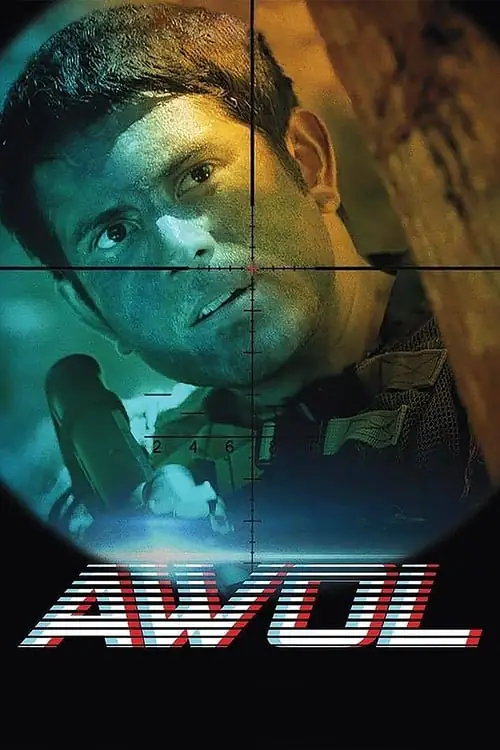
A military marksman whose expertise in long-range elimination has been honed through years of tactical deployment embarks on a relentless pursuit of the architect behind an assassination attempt that threatened to extinguish his entire family. The film charts the transformation of a disciplined soldier into an instrument of personal retribution, a metamorphosis that strips away the institutional justifications that previously sanitized his lethal craft. Where once he operated within the chain of command, his targets designated by intelligence assessments and rules of engagement, now he follows the imperatives of blood loyalty, his crosshairs seeking a man whose crime was not against the state but against the most intimate coordinates of his existence. The narrative's tension derives from the erosion of the boundary between professional duty and vendetta, between the controlled violence of sanctioned warfare and the ungovernable fury of a father whose domestic sanctuary has been violated. The protagonist's tactical knowledge, his understanding of trajectories and windage and the geometry of concealed positions, becomes simultaneously his greatest asset and the marker of what he has sacrificed: a man who calculates death for a living has necessarily calcified some portion of his emotional landscape, and the attempt on his family shatters that protective carapace with devastating consequences. The film's visual grammar mirrors the protagonist's trained perspective, the camera adopting a surveillant distance that alternates with moments of jarring proximity when emotion overrides training. The action sequences are choreographed with a methodical rigor that reflects the protagonist's professional methodology, each engagement planned and executed with the precision of a military operation even as the underlying motivation grows increasingly personal and volatile. The central question the film poses is whether the skills of war can be legitimately redeployed in the service of private justice, or whether crossing that threshold transforms the protector into something indistinguishable from the threat he pursues. The answer the narrative provides is deliberately uncomfortable, suggesting that the distance between soldier and vigilante is shorter than any uniform would care to acknowledge.
A military marksman whose expertise in long-range elimination has been honed through years of tactical deployment embarks on a relentless pursuit of the architect behind an assassination attempt that threatened to extinguish his entire family. The film charts the transformation of a disciplined soldier into an instrument of personal retribution, a metamorphosis that strips away the institutional justifications that previously sanitized his lethal craft. Where once he operated within the chain of command, his targets designated by intelligence assessments and rules of engagement, now he follows the imperatives of blood loyalty, his crosshairs seeking a man whose crime was not against the state but against the most intimate coordinates of his existence. The narrative's tension derives from the erosion of the boundary between professional duty and vendetta, between the controlled violence of sanctioned warfare and the ungovernable fury of a father whose domestic sanctuary has been violated. The protagonist's tactical knowledge, his understanding of trajectories and windage and the geometry of concealed positions, becomes simultaneously his greatest asset and the marker of what he has sacrificed: a man who calculates death for a living has necessarily calcified some portion of his emotional landscape, and the attempt on his family shatters that protective carapace with devastating consequences. The film's visual grammar mirrors the protagonist's trained perspective, the camera adopting a surveillant distance that alternates with moments of jarring proximity when emotion overrides training. The action sequences are choreographed with a methodical rigor that reflects the protagonist's professional methodology, each engagement planned and executed with the precision of a military operation even as the underlying motivation grows increasingly personal and volatile. The central question the film poses is whether the skills of war can be legitimately redeployed in the service of private justice, or whether crossing that threshold transforms the protector into something indistinguishable from the threat he pursues. The answer the narrative provides is deliberately uncomfortable, suggesting that the distance between soldier and vigilante is shorter than any uniform would care to acknowledge.
— Diver's log, recovered 1933, pressure index 57