Dive Log
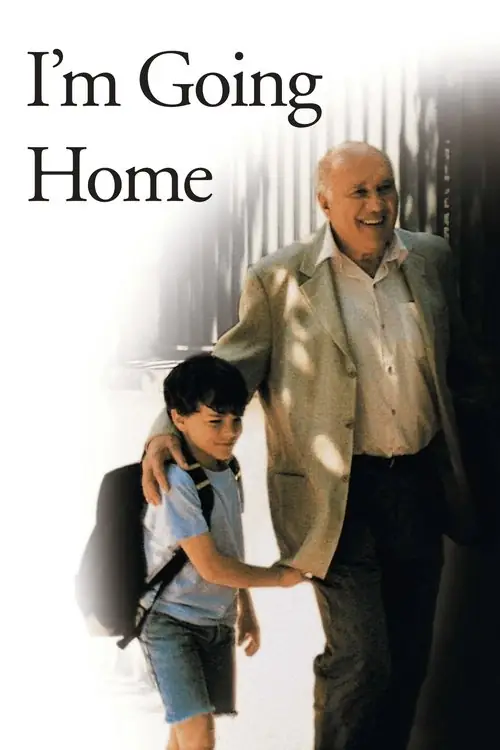
The settled rhythms of a venerable Parisian performer's autumnal existence are shattered by a telephone call bearing news of catastrophic loss: his spouse, his daughter, and his son-in-law have perished in an automobile accident, leaving behind a grandchild who must now be absorbed into the fragile architecture of a grieving household. The film attends to the aftermath of this annihilation with a patience that honors the gradations of sorrow, observing how the mechanisms of daily life continue to function even as their meaning drains away. The actor's routines, the morning walk to the café, the rehearsal of lines, the familiar rituals of theatrical preparation, persist like a clock that continues ticking after its owner has departed, marking time that no longer belongs to anyone. Forced into the unaccustomed role of guardian, the grandfather discovers that the child's presence simultaneously sustains and confounds him, demanding a species of engagement that the self-protective habits of a solitary lifetime have not prepared him to provide. The boy becomes both anchor and reminder, his needs imposing a structure on days that would otherwise dissolve into formless bereavement, while his very existence stands as living evidence of what has been irretrievably lost. The film maps the topology of this new domestic arrangement with meticulous compassion, the kitchen conversations and bedtime rituals and awkward attempts at consolation rendered with the observational precision of a documentarian who understands that grief resides not in dramatic outburst but in the thousand small adjustments that loss necessitates. The professional offers that arrive, a garish television production and a hastily arranged substitution in a film adaptation of modernist literature, serve as the narrative's cruelest mirror. Each role requires a vitality that the actor can no longer summon, the distance between the characters he once inhabited and the diminished figure he has become rendered excruciatingly visible in the gap between script and performance. The film's final movements acknowledge what the protagonist has been circling since the opening frame: that the stage upon which he has spent his entire life performing can no longer accommodate the weight of what he carries, and that the most courageous act remaining to him is the acknowledgment that some chapters conclude not with applause but with silence.
The settled rhythms of a venerable Parisian performer's autumnal existence are shattered by a telephone call bearing news of catastrophic loss: his spouse, his daughter, and his son-in-law have perished in an automobile accident, leaving behind a grandchild who must now be absorbed into the fragile architecture of a grieving household. The film attends to the aftermath of this annihilation with a patience that honors the gradations of sorrow, observing how the mechanisms of daily life continue to function even as their meaning drains away. The actor's routines, the morning walk to the café, the rehearsal of lines, the familiar rituals of theatrical preparation, persist like a clock that continues ticking after its owner has departed, marking time that no longer belongs to anyone. Forced into the unaccustomed role of guardian, the grandfather discovers that the child's presence simultaneously sustains and confounds him, demanding a species of engagement that the self-protective habits of a solitary lifetime have not prepared him to provide. The boy becomes both anchor and reminder, his needs imposing a structure on days that would otherwise dissolve into formless bereavement, while his very existence stands as living evidence of what has been irretrievably lost. The film maps the topology of this new domestic arrangement with meticulous compassion, the kitchen conversations and bedtime rituals and awkward attempts at consolation rendered with the observational precision of a documentarian who understands that grief resides not in dramatic outburst but in the thousand small adjustments that loss necessitates. The professional offers that arrive, a garish television production and a hastily arranged substitution in a film adaptation of modernist literature, serve as the narrative's cruelest mirror. Each role requires a vitality that the actor can no longer summon, the distance between the characters he once inhabited and the diminished figure he has become rendered excruciatingly visible in the gap between script and performance. The film's final movements acknowledge what the protagonist has been circling since the opening frame: that the stage upon which he has spent his entire life performing can no longer accommodate the weight of what he carries, and that the most courageous act remaining to him is the acknowledgment that some chapters conclude not with applause but with silence.
— Diver's log, recovered 1936, pressure index 80