Dive Log
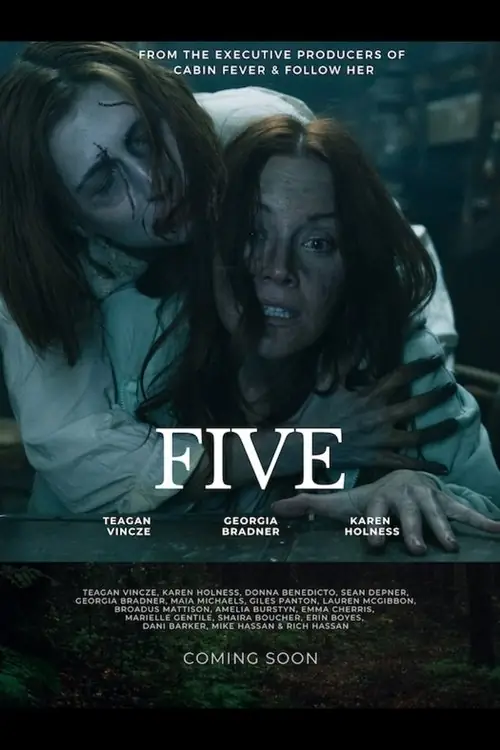
Occupying the delirious intersection of industry satire and supernatural horror, this audacious genre hybrid proposes that the most terrifying possession might not be demonic but professional — that the compulsion to reclaim celebrity, to force one's image back onto screens from which it has been erased, constitutes its own species of unholy yearning. The protagonist enters the narrative already haunted by the ghosts of her former prominence: a cascade of commercial failures and a sojourn in rehabilitation have reduced her from luminous to negligible, and the romantic comedy she has been engaged to carry represents not merely employment but a ritual of resurrection, a desperate attempt to compel the public gaze to return to a face it has forgotten. The filmmakers construct their metafictional architecture with sly deliberation: the production within the film is a formulaic confection designed to refurbish a tarnished brand, and this very superficiality — the genre's reflexive avoidance of anything genuinely disturbing — sets the stage for the eruption of authentic horror when the supernatural intrudes upon the manufactured cheerfulness of the rom-com set. The forest cabin that becomes the site of possession functions as a spatial metaphor for the unconscious: a structure concealed beneath the surface of the production's daylight world, harboring forces that the bright, controlled environment of the shoot has been designed to exclude. Once the entity takes hold, the performer's body becomes contested terrain between two regimes of performance — the disciplined self-presentation that celebrity demands and the uninhibited corporeal chaos that the demon unleashes — and the resulting disjunction generates sequences of blackly comic terror as the crew struggles to distinguish between behavior they can attribute to difficult acting and something far more alarming. Cinematographic choices exploit the visual grammar of both genres: the warm, flat lighting of romantic comedy collides with the shadow-drenched compositions of demonic cinema, and the collision itself produces a third visual register that belongs to neither tradition but draws energy from their mutual contamination. The supporting cast of industry professionals — agents, directors, publicists — respond to the crisis with the particular anxiety of people for whom chaos is primarily a scheduling problem, their professional reflexes constituting a comedy of priorities that the demonic presence renders increasingly absurd. The work ultimately argues that the entertainment industry's mechanisms of rehabilitation — the comeback vehicle, the image overhaul, the strategic vulnerability — are themselves forms of possession, and that the demon's intervention merely makes visible the violence that the star-making apparatus conceals beneath its smiling surfaces.
Occupying the delirious intersection of industry satire and supernatural horror, this audacious genre hybrid proposes that the most terrifying possession might not be demonic but professional — that the compulsion to reclaim celebrity, to force one's image back onto screens from which it has been erased, constitutes its own species of unholy yearning. The protagonist enters the narrative already haunted by the ghosts of her former prominence: a cascade of commercial failures and a sojourn in rehabilitation have reduced her from luminous to negligible, and the romantic comedy she has been engaged to carry represents not merely employment but a ritual of resurrection, a desperate attempt to compel the public gaze to return to a face it has forgotten. The filmmakers construct their metafictional architecture with sly deliberation: the production within the film is a formulaic confection designed to refurbish a tarnished brand, and this very superficiality — the genre's reflexive avoidance of anything genuinely disturbing — sets the stage for the eruption of authentic horror when the supernatural intrudes upon the manufactured cheerfulness of the rom-com set. The forest cabin that becomes the site of possession functions as a spatial metaphor for the unconscious: a structure concealed beneath the surface of the production's daylight world, harboring forces that the bright, controlled environment of the shoot has been designed to exclude. Once the entity takes hold, the performer's body becomes contested terrain between two regimes of performance — the disciplined self-presentation that celebrity demands and the uninhibited corporeal chaos that the demon unleashes — and the resulting disjunction generates sequences of blackly comic terror as the crew struggles to distinguish between behavior they can attribute to difficult acting and something far more alarming. Cinematographic choices exploit the visual grammar of both genres: the warm, flat lighting of romantic comedy collides with the shadow-drenched compositions of demonic cinema, and the collision itself produces a third visual register that belongs to neither tradition but draws energy from their mutual contamination. The supporting cast of industry professionals — agents, directors, publicists — respond to the crisis with the particular anxiety of people for whom chaos is primarily a scheduling problem, their professional reflexes constituting a comedy of priorities that the demonic presence renders increasingly absurd. The work ultimately argues that the entertainment industry's mechanisms of rehabilitation — the comeback vehicle, the image overhaul, the strategic vulnerability — are themselves forms of possession, and that the demon's intervention merely makes visible the violence that the star-making apparatus conceals beneath its smiling surfaces.
— Diver's log, recovered 2007, pressure index 92