Dive Log
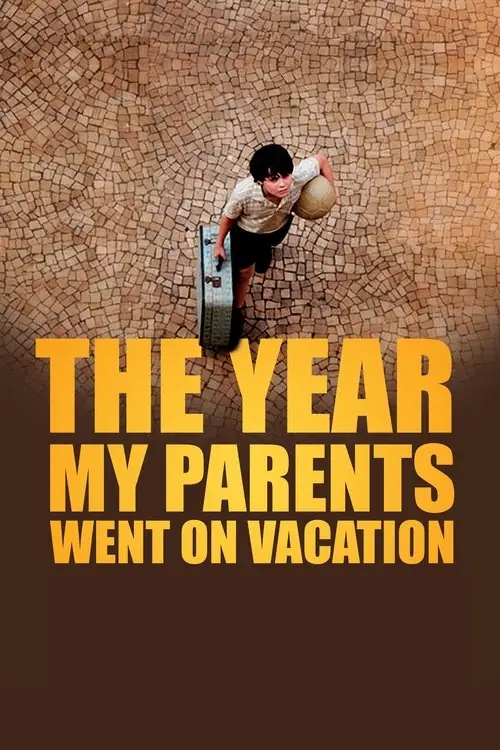
A child is deposited into the labyrinthine streets of São Paulo's Bom Retiro neighborhood, a predominantly Jewish enclave, as the political machinery of a military dictatorship grinds forward and the nation's attention is seized by the spectacle of the 1970 World Cup. Left in the care of an eccentric grandfather while his parents depart under circumstances that gradually reveal their political urgency, the boy inhabits a world where the coordinates of normalcy have been quietly rearranged. The neighborhood pulses with the polyglot energy of immigrant commerce, Yiddish and Portuguese and Italian overlapping in doorways and market stalls, while the tremors of state repression move beneath the surface like subterranean water, felt but seldom named. The film constructs its emotional architecture through the selective perspective of a child who perceives the adult world as a constellation of half-understood signals: whispered conversations that cease at his approach, adults who vanish without explanation, the peculiar intensity with which his grandfather listens to radio broadcasts that carry both football commentary and coded political intelligence. The World Cup functions as the film's most devastating irony, a festival of national triumph unfolding in perfect synchronization with the consolidation of authoritarian control. Every Brazilian goal becomes a small betrayal, the crowd's euphoria drowning out the silence of those who have been disappeared. What distinguishes the director's approach is the restraint with which political horror is rendered. The dictatorship is never depicted through the imagery of violence that characterizes so much Latin American cinema of this period; instead, it manifests as absence, as the negative space around which the characters arrange their diminished lives. The boy's childhood proceeds with a surface normalcy that the viewer recognizes as a manufactured illusion, his games and friendships and schoolboy routines taking place atop a foundation of concealed terror. The film becomes a meditation on how political catastrophe infiltrates the most intimate spaces of domestic life, transforming the texture of childhood itself into something irrevocably altered, a landscape where wonder and dread coexist in the same frame.
A child is deposited into the labyrinthine streets of São Paulo's Bom Retiro neighborhood, a predominantly Jewish enclave, as the political machinery of a military dictatorship grinds forward and the nation's attention is seized by the spectacle of the 1970 World Cup. Left in the care of an eccentric grandfather while his parents depart under circumstances that gradually reveal their political urgency, the boy inhabits a world where the coordinates of normalcy have been quietly rearranged. The neighborhood pulses with the polyglot energy of immigrant commerce, Yiddish and Portuguese and Italian overlapping in doorways and market stalls, while the tremors of state repression move beneath the surface like subterranean water, felt but seldom named. The film constructs its emotional architecture through the selective perspective of a child who perceives the adult world as a constellation of half-understood signals: whispered conversations that cease at his approach, adults who vanish without explanation, the peculiar intensity with which his grandfather listens to radio broadcasts that carry both football commentary and coded political intelligence. The World Cup functions as the film's most devastating irony, a festival of national triumph unfolding in perfect synchronization with the consolidation of authoritarian control. Every Brazilian goal becomes a small betrayal, the crowd's euphoria drowning out the silence of those who have been disappeared. What distinguishes the director's approach is the restraint with which political horror is rendered. The dictatorship is never depicted through the imagery of violence that characterizes so much Latin American cinema of this period; instead, it manifests as absence, as the negative space around which the characters arrange their diminished lives. The boy's childhood proceeds with a surface normalcy that the viewer recognizes as a manufactured illusion, his games and friendships and schoolboy routines taking place atop a foundation of concealed terror. The film becomes a meditation on how political catastrophe infiltrates the most intimate spaces of domestic life, transforming the texture of childhood itself into something irrevocably altered, a landscape where wonder and dread coexist in the same frame.
— Diver's log, recovered 1973, pressure index 67