Dive Log
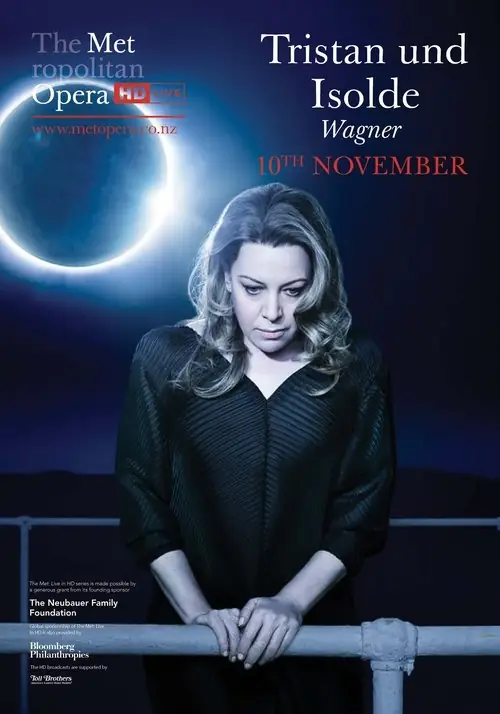
This captured broadcast transposes a polarizing stage interpretation of Wagner's defining meditation on desire and death to the cinematic register, the director's conceptual vision imposing a contemporary psychological framework upon the romantic source material. The production's central conceit transforms the medieval Celtic legend into a chamber of interiority, its maritime settings reimagined as spaces of dreamlike instability that externalize the opera's obsession with the dissolution of boundaries between waking and sleeping, longing and its fulfillment. The two singers anchoring the title roles deliver performances of searing dramatic commitment, their voices navigating the punishing tessitura with a security that never sacrifices emotional specificity to vocal accomplishment. The male lead embodies his tormented knight with a tenor whose inherent brightness carries undertones of darkness, the instrument revealing the character's spiritual exhaustion even as it rises to the score's heroic demands. His counterpart—the soprano assuming one of the most formidable roles in the operatic repertoire—charts her character's trajectory from wounded dignity to transcendent surrender with a psychological specificity that illuminates the music's chromatic depths. The bass portraying the betrayed monarch delivers his act-two monologue of stunned grief with a gravity that anchors the production's emotional architecture, his discovery of duplicity rendered all the more devastating by the paternal tenderness he has previously displayed. The mezzo-soprano cast as the confidante whose pharmacological intervention sets the catastrophe in motion shades her warnings with a darkness that foretells the tragedy's approach. The conductor draws from the orchestra a reading that balances the score's visceral intensity with its structural sophistication, the harmonic amplifications acquiring maximum impact through the careful calibration of temporal flow. The production design favors angular minimalism over picturesque naturalism, the visual vocabulary encoding the drama's psychological dimensions rather than merely illustrating its narrative surface. The cinematography, calibrated for the broadcast medium, navigates the tension between stage distance and operatic close-up with a fluency that respects the integrity of the theatrical experience while exploiting cinema's capacity for facial scrutiny. The result is a document of a production that honors Wagner's ambition to create the art work of the future while demonstrating that the future, in this case, retains the capacity to startle.
This captured broadcast transposes a polarizing stage interpretation of Wagner's defining meditation on desire and death to the cinematic register, the director's conceptual vision imposing a contemporary psychological framework upon the romantic source material. The production's central conceit transforms the medieval Celtic legend into a chamber of interiority, its maritime settings reimagined as spaces of dreamlike instability that externalize the opera's obsession with the dissolution of boundaries between waking and sleeping, longing and its fulfillment. The two singers anchoring the title roles deliver performances of searing dramatic commitment, their voices navigating the punishing tessitura with a security that never sacrifices emotional specificity to vocal accomplishment. The male lead embodies his tormented knight with a tenor whose inherent brightness carries undertones of darkness, the instrument revealing the character's spiritual exhaustion even as it rises to the score's heroic demands. His counterpart—the soprano assuming one of the most formidable roles in the operatic repertoire—charts her character's trajectory from wounded dignity to transcendent surrender with a psychological specificity that illuminates the music's chromatic depths. The bass portraying the betrayed monarch delivers his act-two monologue of stunned grief with a gravity that anchors the production's emotional architecture, his discovery of duplicity rendered all the more devastating by the paternal tenderness he has previously displayed. The mezzo-soprano cast as the confidante whose pharmacological intervention sets the catastrophe in motion shades her warnings with a darkness that foretells the tragedy's approach. The conductor draws from the orchestra a reading that balances the score's visceral intensity with its structural sophistication, the harmonic amplifications acquiring maximum impact through the careful calibration of temporal flow. The production design favors angular minimalism over picturesque naturalism, the visual vocabulary encoding the drama's psychological dimensions rather than merely illustrating its narrative surface. The cinematography, calibrated for the broadcast medium, navigates the tension between stage distance and operatic close-up with a fluency that respects the integrity of the theatrical experience while exploiting cinema's capacity for facial scrutiny. The result is a document of a production that honors Wagner's ambition to create the art work of the future while demonstrating that the future, in this case, retains the capacity to startle.
— Diver's log, recovered 2015, pressure index 78