Dive Log
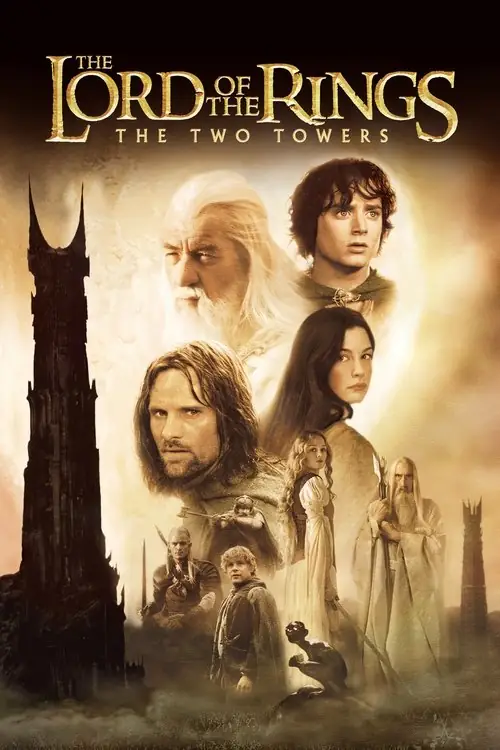
This middle chapter of an epochal fantasy trilogy fractures its narrative across divergent trajectories, the sundered fellowship scattering into three interlocking storylines that collectively compose one of the most structurally audacious entries in the blockbuster tradition. The filmmaker embraces the particular challenges of the second act—the dispersion of ensemble, the escalation of stakes, the deepening of moral complexity—with a formal confidence that transforms narrative fragmentation into thematic resonance. The central pairing of the ring-bearer and his gardener advances toward the volcanic heart of the antagonistic realm, their journey acquiring the dimensions of pilgrimage, the object they carry functioning as both burden and corruption. Parallel to this intimate odyssey, the warrior triad of archer, dwarf, and heir-apparent pursue their abducted hobbit companions across kingdoms rendered with a geographic specificity that lends the fantasy a documentary gravity. Their path intersects with the horse-lords of the plains, a civilization rendered with anthropological attentiveness to ritual and custom. Meanwhile, the corrupted sorcerer marshals industrial destruction from his citadel, his mechanization of the natural world functioning as the trilogy's most potent ecological allegory. The two fortresses of the title—one of stone and treachery, one of darkness and surveillance—loom as architectural embodiments of opposing forms of tyranny. The technical accomplishments achieve a synthesis rarely equaled in commercial cinema: practical effects blending with digital sorcery to produce a world of tactile authenticity. The battle sequence that consumes the film's latter third redefines the possibilities of large-scale cinematic conflict, its sustained duration and geographical coherence producing an experience of immersive warfare rather than montage abstraction. Performances across the ensemble deepen, the actors having internalized their characters sufficiently to modulate between intimate register and mythic scale. The score weaves leitmotifs with operatic intelligence, each theme carrying the accumulated weight of its prior deployments. What emerges is a work that honors its source material's tragic undercurrent—the recognition that victory, even when achieved, arrives accompanied by loss, and that the costs of moral action can never be fully reckoned until the accounting is complete.
This middle chapter of an epochal fantasy trilogy fractures its narrative across divergent trajectories, the sundered fellowship scattering into three interlocking storylines that collectively compose one of the most structurally audacious entries in the blockbuster tradition. The filmmaker embraces the particular challenges of the second act—the dispersion of ensemble, the escalation of stakes, the deepening of moral complexity—with a formal confidence that transforms narrative fragmentation into thematic resonance. The central pairing of the ring-bearer and his gardener advances toward the volcanic heart of the antagonistic realm, their journey acquiring the dimensions of pilgrimage, the object they carry functioning as both burden and corruption. Parallel to this intimate odyssey, the warrior triad of archer, dwarf, and heir-apparent pursue their abducted hobbit companions across kingdoms rendered with a geographic specificity that lends the fantasy a documentary gravity. Their path intersects with the horse-lords of the plains, a civilization rendered with anthropological attentiveness to ritual and custom. Meanwhile, the corrupted sorcerer marshals industrial destruction from his citadel, his mechanization of the natural world functioning as the trilogy's most potent ecological allegory. The two fortresses of the title—one of stone and treachery, one of darkness and surveillance—loom as architectural embodiments of opposing forms of tyranny. The technical accomplishments achieve a synthesis rarely equaled in commercial cinema: practical effects blending with digital sorcery to produce a world of tactile authenticity. The battle sequence that consumes the film's latter third redefines the possibilities of large-scale cinematic conflict, its sustained duration and geographical coherence producing an experience of immersive warfare rather than montage abstraction. Performances across the ensemble deepen, the actors having internalized their characters sufficiently to modulate between intimate register and mythic scale. The score weaves leitmotifs with operatic intelligence, each theme carrying the accumulated weight of its prior deployments. What emerges is a work that honors its source material's tragic undercurrent—the recognition that victory, even when achieved, arrives accompanied by loss, and that the costs of moral action can never be fully reckoned until the accounting is complete.
— Diver's log, recovered 2008, pressure index 53