Dive Log
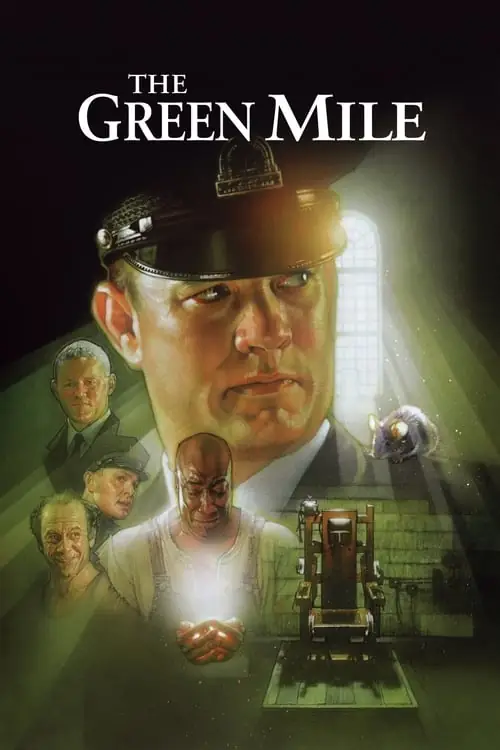
Within the institutional gloom of a Depression-era penitentiary's execution corridor, this metaphysical chamber piece constructs one of American cinema's most searching examinations of the tension between the miraculous and the juridical. The setting is deliberate: a place designed to administer the state's most absolute and irreversible power becomes the site of an intervention that defies every rational framework the penal system relies upon. A condemned man of colossal physical stature and preternatural gentleness carries within his body a gift that contradicts the premise of his sentence — the capacity to draw illness and injury from other organisms and transmute it into nothing. This ability, deployed in hushed, almost reluctant acts of restoration, introduces a metaphysical rupture into a space governed by rigid protocol, and the ensuing conflict is not merely legal but cosmological: what does a state do when it possesses the authority to extinguish a source of healing? The supervising officer, a man whose professional identity has been built on the orderly administration of death, undergoes a moral dislocation that the film traces with painstaking care. His is not a sudden conversion but a slow, agonized renegotiation of every assumption that has allowed him to perform his duties without psychic collapse. The filmmakers employ the elongated running time as a formal analogue to the stretch of corridor that gives the work its name — a passage that must be walked at a certain pace, with attention to each footfall, because what occurs along it demands the full weight of contemplation. Supporting figures populate the cellblock with varied responses to the inexplicable: crude mockery, devout wonder, opportunistic exploitation, bureaucratic indifference — each representing a distinct register of human encounter with the transcendent. Visual choices favor the sickly green fluorescence of institutional lighting, a pall that suffuses every frame with the queasy luminosity of places where death is routine. Yet within this chromatic oppression, the healing sequences blaze with an almost religious intensity, light appearing to pour from the healer's hands as though the celluloid itself were briefly touched by the phenomena it depicts. This is popular filmmaking at its most philosophically ambitious, daring to ask whether mercy is a human invention or a force that operates through us, and whether the systems we build to administer justice can accommodate interventions from a order of being they were never designed to recognize.
Within the institutional gloom of a Depression-era penitentiary's execution corridor, this metaphysical chamber piece constructs one of American cinema's most searching examinations of the tension between the miraculous and the juridical. The setting is deliberate: a place designed to administer the state's most absolute and irreversible power becomes the site of an intervention that defies every rational framework the penal system relies upon. A condemned man of colossal physical stature and preternatural gentleness carries within his body a gift that contradicts the premise of his sentence — the capacity to draw illness and injury from other organisms and transmute it into nothing. This ability, deployed in hushed, almost reluctant acts of restoration, introduces a metaphysical rupture into a space governed by rigid protocol, and the ensuing conflict is not merely legal but cosmological: what does a state do when it possesses the authority to extinguish a source of healing? The supervising officer, a man whose professional identity has been built on the orderly administration of death, undergoes a moral dislocation that the film traces with painstaking care. His is not a sudden conversion but a slow, agonized renegotiation of every assumption that has allowed him to perform his duties without psychic collapse. The filmmakers employ the elongated running time as a formal analogue to the stretch of corridor that gives the work its name — a passage that must be walked at a certain pace, with attention to each footfall, because what occurs along it demands the full weight of contemplation. Supporting figures populate the cellblock with varied responses to the inexplicable: crude mockery, devout wonder, opportunistic exploitation, bureaucratic indifference — each representing a distinct register of human encounter with the transcendent. Visual choices favor the sickly green fluorescence of institutional lighting, a pall that suffuses every frame with the queasy luminosity of places where death is routine. Yet within this chromatic oppression, the healing sequences blaze with an almost religious intensity, light appearing to pour from the healer's hands as though the celluloid itself were briefly touched by the phenomena it depicts. This is popular filmmaking at its most philosophically ambitious, daring to ask whether mercy is a human invention or a force that operates through us, and whether the systems we build to administer justice can accommodate interventions from a order of being they were never designed to recognize.
— Diver's log, recovered 1976, pressure index 93