Dive Log
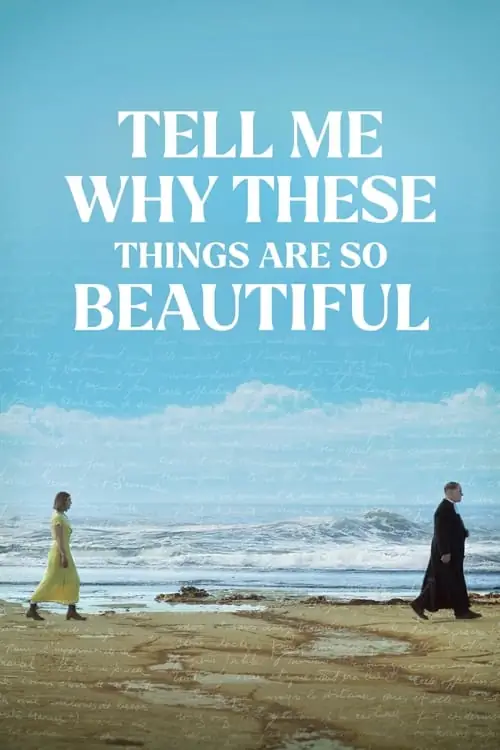
Positioned at the delicate intersection of intellectual mentorship and erotic awakening, this Quebecois period piece excavates the charged correspondence between a middle-aged religious scholar and the young botanical protégée whose mind he cultivates even as their exchanged letters cultivate something far more turbulent between them. The elder figure, a friar whose devotion to cataloguing the province's flora has earned him scientific renown, encounters in his new charge a spirit of parallel intensity — a woman whose proximity to mortality has sharpened rather than dulled her appetite for understanding the corporeal world in all its frank biological detail. What begins as pedagogical guidance gradually transforms into an arena of mutual revelation, the traditional hierarchy of teacher and student dissolving as each correspondent brings private knowledge to their shared inquiry. The filmmaker constructs their relationship primarily through the written word, rendering the epistolary form as a species of intimate performance — each letter a stage upon which desire and restraint enact their perpetual dialectic. The visual approach complements this textual intimacy: scenes of composition are shot in austere, chiaroscuro-lit interiors where the act of writing becomes a physical event, the pen's pressure on paper registering as a surrogate for touch that propriety forbids in the flesh. Botanical imagery permeates the frame throughout, the meticulous illustration of stamens and pistils serving as a visual counterpoint to the characters' frank discursions on physical intimacy — the language of scientific classification providing both alibi and metaphor for conversations that ecclesiastical convention would otherwise silence. The younger woman's responses to her mentor's theoretical provocations draw from her own carnal knowledge, establishing an intellectual equality that the age differential alone would seem to preclude. Their exchange constitutes a private republic of discourse, one where theological doctrine and somatic experience are permitted to interrogate each other without the mediating filter of institutional censure. The film's temporal structure, spanning their entire correspondence until the brother's passing, accumulates the gravity of a relationship that never fully resolves into either the platonic or the romantic, instead occupying a luminous intermediate territory where the life of the mind and the promptings of the body achieve a fragile, hard-won synthesis.
Positioned at the delicate intersection of intellectual mentorship and erotic awakening, this Quebecois period piece excavates the charged correspondence between a middle-aged religious scholar and the young botanical protégée whose mind he cultivates even as their exchanged letters cultivate something far more turbulent between them. The elder figure, a friar whose devotion to cataloguing the province's flora has earned him scientific renown, encounters in his new charge a spirit of parallel intensity — a woman whose proximity to mortality has sharpened rather than dulled her appetite for understanding the corporeal world in all its frank biological detail. What begins as pedagogical guidance gradually transforms into an arena of mutual revelation, the traditional hierarchy of teacher and student dissolving as each correspondent brings private knowledge to their shared inquiry. The filmmaker constructs their relationship primarily through the written word, rendering the epistolary form as a species of intimate performance — each letter a stage upon which desire and restraint enact their perpetual dialectic. The visual approach complements this textual intimacy: scenes of composition are shot in austere, chiaroscuro-lit interiors where the act of writing becomes a physical event, the pen's pressure on paper registering as a surrogate for touch that propriety forbids in the flesh. Botanical imagery permeates the frame throughout, the meticulous illustration of stamens and pistils serving as a visual counterpoint to the characters' frank discursions on physical intimacy — the language of scientific classification providing both alibi and metaphor for conversations that ecclesiastical convention would otherwise silence. The younger woman's responses to her mentor's theoretical provocations draw from her own carnal knowledge, establishing an intellectual equality that the age differential alone would seem to preclude. Their exchange constitutes a private republic of discourse, one where theological doctrine and somatic experience are permitted to interrogate each other without the mediating filter of institutional censure. The film's temporal structure, spanning their entire correspondence until the brother's passing, accumulates the gravity of a relationship that never fully resolves into either the platonic or the romantic, instead occupying a luminous intermediate territory where the life of the mind and the promptings of the body achieve a fragile, hard-won synthesis.
— Diver's log, recovered 1979, pressure index 92