Dive Log
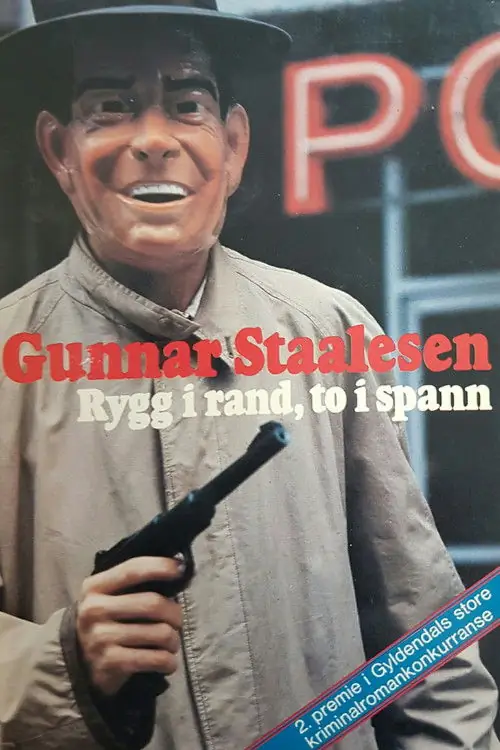
Two criminal investigations of seemingly disparate character, a post office heist and a homicide, unfold simultaneously within the jurisdiction of the Bergen police department, each assigned to a different detective whose methods and temperament reflect the particular demands of their respective case. The procedural mechanics of each inquiry proceed along parallel tracks, the robbery investigator tracing the forensic residue of forced entry and stolen currency while the murder detective pursues the more opaque trail of motive and opportunity that lethal violence always leaves in its wake. Yet the film plants seeds of connection that gradually erode the institutional partition between the two cases, suggesting that the apparent coincidence of their temporal overlap may conceal a deeper structural relationship that neither detective can perceive from within the confines of his individual assignment. The narrative architecture exploits the conventions of the dual-plotline thriller to generate a particular species of suspense: not the question of whodunit but the question of how the two whats relate. Each investigation produces its own revelations, its own dead ends and breakthroughs, and the viewer is positioned in the privileged role of pattern-recognizer, attempting to discern the invisible thread that binds a theft of money to a taking of life. The Bergen setting, with its rain-slicked streets and coastal gloom, provides an atmospheric substrate that lends both investigations a uniform tonality, the murk of the Norwegian winter serving as visual metaphor for the obscurity that conceals the link between the two crimes. What distinguishes the film from routine procedural fare is its insistence that the most significant connections are those that institutional logic is least equipped to recognize. The bureaucratic separation of cases, the compartmentalization of investigative jurisdiction, becomes itself an obstacle to truth, a structural blind spot that the criminals may have counted upon. The two detectives, each competent within his own sphere, must gradually overcome the professional silos that their training has erected in order to perceive the larger design within which their individual cases function as mere components. The film becomes a meditation on the limits of specialization, suggesting that truth often resides in the spaces between established categories, visible only to those willing to trespass across the boundaries that organization imposes upon inquiry.
Two criminal investigations of seemingly disparate character, a post office heist and a homicide, unfold simultaneously within the jurisdiction of the Bergen police department, each assigned to a different detective whose methods and temperament reflect the particular demands of their respective case. The procedural mechanics of each inquiry proceed along parallel tracks, the robbery investigator tracing the forensic residue of forced entry and stolen currency while the murder detective pursues the more opaque trail of motive and opportunity that lethal violence always leaves in its wake. Yet the film plants seeds of connection that gradually erode the institutional partition between the two cases, suggesting that the apparent coincidence of their temporal overlap may conceal a deeper structural relationship that neither detective can perceive from within the confines of his individual assignment. The narrative architecture exploits the conventions of the dual-plotline thriller to generate a particular species of suspense: not the question of whodunit but the question of how the two whats relate. Each investigation produces its own revelations, its own dead ends and breakthroughs, and the viewer is positioned in the privileged role of pattern-recognizer, attempting to discern the invisible thread that binds a theft of money to a taking of life. The Bergen setting, with its rain-slicked streets and coastal gloom, provides an atmospheric substrate that lends both investigations a uniform tonality, the murk of the Norwegian winter serving as visual metaphor for the obscurity that conceals the link between the two crimes. What distinguishes the film from routine procedural fare is its insistence that the most significant connections are those that institutional logic is least equipped to recognize. The bureaucratic separation of cases, the compartmentalization of investigative jurisdiction, becomes itself an obstacle to truth, a structural blind spot that the criminals may have counted upon. The two detectives, each competent within his own sphere, must gradually overcome the professional silos that their training has erected in order to perceive the larger design within which their individual cases function as mere components. The film becomes a meditation on the limits of specialization, suggesting that truth often resides in the spaces between established categories, visible only to those willing to trespass across the boundaries that organization imposes upon inquiry.
— Diver's log, recovered 2013, pressure index 49