Dive Log
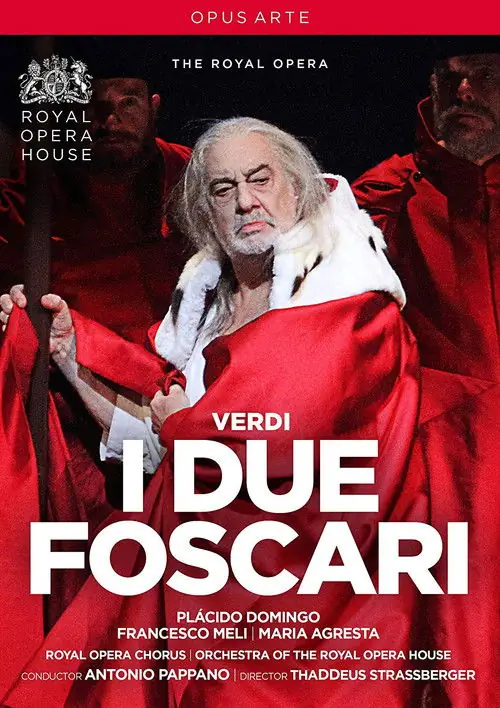
Captured from the hallowed stage of Covent Garden and transposed to the screen with a cinematographic intelligence that honors both the operatic tradition and the specific demands of filmed performance, this presentation of the composer's early-period masterwork reveals a score of astonishing dramatic compression. The narrative inhabits the treacherous political ecology of fifteenth-century Venice, where the apparatus of state operates as a mechanism for the elimination of individual feeling — a republic that demands its citizens sacrifice their private devotions upon the altar of civic order. At the nexus of personal anguish and institutional cruelty stands the Doge, a ruler whose sovereignty extends over an empire but cannot reach into the prison cell where his offspring languishes under a conviction that the audience understands to be fabricated. The libretto constructs a devastating symmetry: the father wields the authority of the state, yet that very authority prohibits him from exercising the mercy that paternal love demands. His daughter-in-law, certain of the condemned man's blamelessness, functions as the moral counterweight — a figure whose certainty about innocence serves only to sharpen the agony of her powerlessness to alter the verdict. The musical architecture deploys the composer's characteristic melodic intensity with a restraint that anticipates his later, more celebrated works: the ensembles are constructed with the precision of clockwork, each vocal line intertwining with its counterparts to produce harmonies that embody the entanglement of the characters' fates. Staging choices emphasize the claustrophobic insularity of Venetian power — the Council Chamber becomes a panopticon of surveillance, and the domestic spaces where private grief might find expression are rendered perpetually vulnerable to political intrusion. Vocal performance across the principal roles achieves the rare feat of making bel canto virtuosity feel like spontaneous emotional utterance rather than technical exhibition. The tenor's phrasing in the prison scenes carries a desperation that transcends the conventions of the form, while the soprano's fury achieves an intensity that threatens to fracture the music's formal boundaries. The baritone portraying the Doge navigates the role's impossible emotional calculus — the competing claims of love and duty, affection and obligation — with a vocal shading that makes every phrase a negotiation between irreconcilable demands. This is opera as moral philosophy, a meditation on the particular cruelty of systems that force those who govern to sacrifice what they cherish most.
Captured from the hallowed stage of Covent Garden and transposed to the screen with a cinematographic intelligence that honors both the operatic tradition and the specific demands of filmed performance, this presentation of the composer's early-period masterwork reveals a score of astonishing dramatic compression. The narrative inhabits the treacherous political ecology of fifteenth-century Venice, where the apparatus of state operates as a mechanism for the elimination of individual feeling — a republic that demands its citizens sacrifice their private devotions upon the altar of civic order. At the nexus of personal anguish and institutional cruelty stands the Doge, a ruler whose sovereignty extends over an empire but cannot reach into the prison cell where his offspring languishes under a conviction that the audience understands to be fabricated. The libretto constructs a devastating symmetry: the father wields the authority of the state, yet that very authority prohibits him from exercising the mercy that paternal love demands. His daughter-in-law, certain of the condemned man's blamelessness, functions as the moral counterweight — a figure whose certainty about innocence serves only to sharpen the agony of her powerlessness to alter the verdict. The musical architecture deploys the composer's characteristic melodic intensity with a restraint that anticipates his later, more celebrated works: the ensembles are constructed with the precision of clockwork, each vocal line intertwining with its counterparts to produce harmonies that embody the entanglement of the characters' fates. Staging choices emphasize the claustrophobic insularity of Venetian power — the Council Chamber becomes a panopticon of surveillance, and the domestic spaces where private grief might find expression are rendered perpetually vulnerable to political intrusion. Vocal performance across the principal roles achieves the rare feat of making bel canto virtuosity feel like spontaneous emotional utterance rather than technical exhibition. The tenor's phrasing in the prison scenes carries a desperation that transcends the conventions of the form, while the soprano's fury achieves an intensity that threatens to fracture the music's formal boundaries. The baritone portraying the Doge navigates the role's impossible emotional calculus — the competing claims of love and duty, affection and obligation — with a vocal shading that makes every phrase a negotiation between irreconcilable demands. This is opera as moral philosophy, a meditation on the particular cruelty of systems that force those who govern to sacrifice what they cherish most.
— Diver's log, recovered 1941, pressure index 57