Dive Log
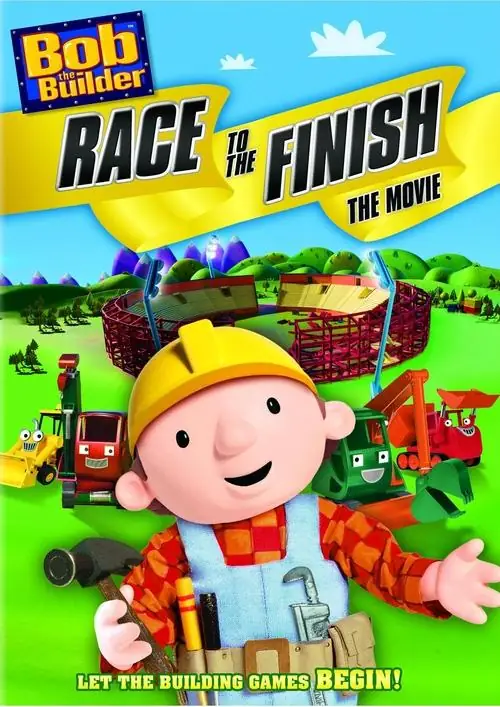
This animated children's entry extends a beloved television property into feature-length territory, transplanting its anthropomorphic machinery and constructive ethos into a narrative of communal labor directed toward a shared civic goal. The premise stakes its dramatic tension on the construction of an athletic venue for a sun-drenched valley community, a project that demands the marshaling of every available mechanical ally. The protagonist—a hard-hatted builder of indomitable optimism—receives reinforcement from two additional machines whose integration into the established ensemble provides the work's primary character dynamics. The filmmakers approach their material with a clear understanding of their audience's developmental coordinates, constructing a narrative whose conflicts remain genuinely engaging without ever threatening the emotional security of the youngest spectators. The themes of cooperative endeavor and collective accomplishment are woven into the fabric of the storytelling rather than superimposed upon it as didactic overlay; the young viewer internalizes the value of collaboration through the procedural pleasure of watching disparate elements converge toward a unified architectural purpose. The animation favors clarity of line and brightness of palette, the visual register calibrated to facilitate comprehension rather than to dazzle. The vocal performances inject personality into each machine, the actors modulating their delivery to encode character traits that remain consistent across the narrative's episodic structure. The musical score reinforces the rhythmic relationship between labor and pleasure, suggesting that work undertaken in common carries its own form of satisfaction independent of its instrumental outcome. What distinguishes the property within the crowded field of children's media is its unapologetic celebration of manual competence—the conviction that building, fixing, and making constitute activities worthy of narrative investment. The closing sequences, in which the completed venue hosts its inaugural athletic contest, deliver a payoff whose satisfaction derives from the viewer's accumulated understanding of the labor that produced the structure. This is children's entertainment that respects its audience's capacity for sustained engagement while quietly modeling forms of social relation—patience, mutual aid, the dignity of physical work—that remain relevant well beyond the demographic to which it explicitly addresses itself.
This animated children's entry extends a beloved television property into feature-length territory, transplanting its anthropomorphic machinery and constructive ethos into a narrative of communal labor directed toward a shared civic goal. The premise stakes its dramatic tension on the construction of an athletic venue for a sun-drenched valley community, a project that demands the marshaling of every available mechanical ally. The protagonist—a hard-hatted builder of indomitable optimism—receives reinforcement from two additional machines whose integration into the established ensemble provides the work's primary character dynamics. The filmmakers approach their material with a clear understanding of their audience's developmental coordinates, constructing a narrative whose conflicts remain genuinely engaging without ever threatening the emotional security of the youngest spectators. The themes of cooperative endeavor and collective accomplishment are woven into the fabric of the storytelling rather than superimposed upon it as didactic overlay; the young viewer internalizes the value of collaboration through the procedural pleasure of watching disparate elements converge toward a unified architectural purpose. The animation favors clarity of line and brightness of palette, the visual register calibrated to facilitate comprehension rather than to dazzle. The vocal performances inject personality into each machine, the actors modulating their delivery to encode character traits that remain consistent across the narrative's episodic structure. The musical score reinforces the rhythmic relationship between labor and pleasure, suggesting that work undertaken in common carries its own form of satisfaction independent of its instrumental outcome. What distinguishes the property within the crowded field of children's media is its unapologetic celebration of manual competence—the conviction that building, fixing, and making constitute activities worthy of narrative investment. The closing sequences, in which the completed venue hosts its inaugural athletic contest, deliver a payoff whose satisfaction derives from the viewer's accumulated understanding of the labor that produced the structure. This is children's entertainment that respects its audience's capacity for sustained engagement while quietly modeling forms of social relation—patience, mutual aid, the dignity of physical work—that remain relevant well beyond the demographic to which it explicitly addresses itself.
— Diver's log, recovered 2025, pressure index 66