Dive Log
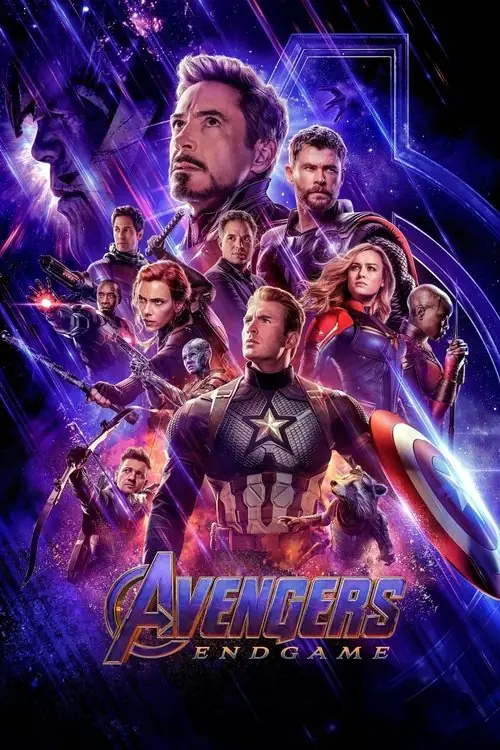
Arriving as the culmination of an unprecedented exercise in serialized commercial storytelling — a twenty-two-film narrative architecture that spread its character development and mythological world-building across a decade of interconnected releases — this climactic chapter confronts the existential void left by its predecessor's genocidal conclusion with a structural audacity that divides its own temporal architecture into distinct emotional registers. The opening movements occupy a register of desolation: a universe halved, its surviving population adrift in grief without the consolations of closure, its heroes dispersed into various species of denial, withdrawal, or obsessive fixation. The filmmakers resist the impulse toward immediate redemptive action, allowing the weight of irretrievable loss to accumulate across scenes of domestic mourning and organizational paralysis before introducing the narrative mechanism that will propel the enterprise toward its restorative premise — the speculative possibility that temporal manipulation might permit the recovery of what has been irrevocably lost. The subsequent heist-like construction, which dispatches teams of protagonists into strategically selected moments from their shared history, operates as both fan-service spectacle and genuine philosophical inquiry: what is the cost of revisiting the past, of undoing consequence, of treating memory as a landscape that can be re-entered and revised? The action sequences staged within these temporal excursions exploit the particular pleasure of revisiting familiar visual environments with new dramatic intent — spaces the audience has occupied before now recontextualized by the urgency of the present mission and the pathos of characters encountering earlier versions of themselves who have not yet suffered what the future holds. Visual effects achieve a scope that borders on the hallucinatory, the climactic confrontation assembling more simultaneous on-screen combatants than any previous entry in the franchise while maintaining sufficient compositional clarity to preserve emotional stakes within the spectacle. The resolution, rather than simply restoring the status quo, insists that the exercise of extraordinary power exacts a permanent toll — that even the successful reversal of cosmic atrocity leaves scars that time travel cannot erase, and that sacrifice, once offered, constitutes a debt that no mechanism of narrative restitution can fully discharge.
Arriving as the culmination of an unprecedented exercise in serialized commercial storytelling — a twenty-two-film narrative architecture that spread its character development and mythological world-building across a decade of interconnected releases — this climactic chapter confronts the existential void left by its predecessor's genocidal conclusion with a structural audacity that divides its own temporal architecture into distinct emotional registers. The opening movements occupy a register of desolation: a universe halved, its surviving population adrift in grief without the consolations of closure, its heroes dispersed into various species of denial, withdrawal, or obsessive fixation. The filmmakers resist the impulse toward immediate redemptive action, allowing the weight of irretrievable loss to accumulate across scenes of domestic mourning and organizational paralysis before introducing the narrative mechanism that will propel the enterprise toward its restorative premise — the speculative possibility that temporal manipulation might permit the recovery of what has been irrevocably lost. The subsequent heist-like construction, which dispatches teams of protagonists into strategically selected moments from their shared history, operates as both fan-service spectacle and genuine philosophical inquiry: what is the cost of revisiting the past, of undoing consequence, of treating memory as a landscape that can be re-entered and revised? The action sequences staged within these temporal excursions exploit the particular pleasure of revisiting familiar visual environments with new dramatic intent — spaces the audience has occupied before now recontextualized by the urgency of the present mission and the pathos of characters encountering earlier versions of themselves who have not yet suffered what the future holds. Visual effects achieve a scope that borders on the hallucinatory, the climactic confrontation assembling more simultaneous on-screen combatants than any previous entry in the franchise while maintaining sufficient compositional clarity to preserve emotional stakes within the spectacle. The resolution, rather than simply restoring the status quo, insists that the exercise of extraordinary power exacts a permanent toll — that even the successful reversal of cosmic atrocity leaves scars that time travel cannot erase, and that sacrifice, once offered, constitutes a debt that no mechanism of narrative restitution can fully discharge.
— Diver's log, recovered 1999, pressure index 51