Dive Log
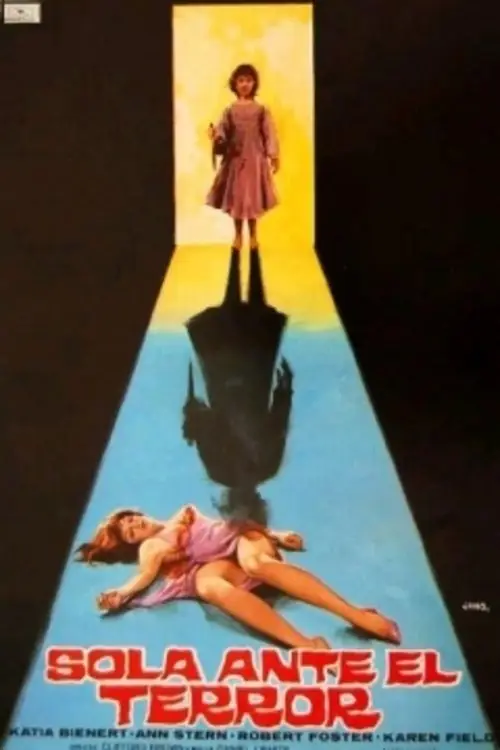
A woman rendered immobile by paralysis inhabits a domestic prison tended by her two siblings, her body a motionless repository for obsessions that fester in the absence of physical agency. The murder of her father during her childhood, an event that severed the trajectory of her life before it had properly begun, has calcified within her psyche into a conviction that transcends rational explanation: she believes the dead man speaks to her from beyond the grave, issuing commands that demand obedience. The paternal voice, whether supernatural communication or psychological projection, assigns her a mission of retribution against those responsible for his demise, and her physical confinement becomes paradoxically matched with an unshakable sense of purpose that requires neither locomotion nor consent from the living. The film generates its considerable unease from the friction between the protagonist's corporeal helplessness and the terrifying reach of her will. Confined to bed or wheelchair, unable to pursue or confront, she nonetheless exercises a dominion over the household that reduces her caretakers to instruments of her vengeance. The sisters find themselves trapped in a domestic architecture of guilt and obligation, unable to dismiss the murdered father's spectral commands or their sister's chilling certainty that she serves as his vessel. The boundary between filial devotion and moral complicity dissolves as the paralyzed woman's directives grow more specific and more violent. The direction exploits the claustrophobic setting with surgical precision, framing the domestic interiors as spaces where the psychological pressure steadily accumulates without release. The camera lingers on the paralyzed woman's face with an intensity that transforms her immobility into a form of concentration, her stillness becoming indistinguishable from predatory patience. The film refuses to resolve the ambiguity at its core: whether the father's voice originates from the supernatural or from the daughter's traumatized unconscious matters less than the devastating recognition that grief, when sufficiently profound, can command the living as absolutely as any ghost. The result is a study in the terrible authority of the wounded, a reminder that paralysis of the body does not extend to the reach of obsession.
A woman rendered immobile by paralysis inhabits a domestic prison tended by her two siblings, her body a motionless repository for obsessions that fester in the absence of physical agency. The murder of her father during her childhood, an event that severed the trajectory of her life before it had properly begun, has calcified within her psyche into a conviction that transcends rational explanation: she believes the dead man speaks to her from beyond the grave, issuing commands that demand obedience. The paternal voice, whether supernatural communication or psychological projection, assigns her a mission of retribution against those responsible for his demise, and her physical confinement becomes paradoxically matched with an unshakable sense of purpose that requires neither locomotion nor consent from the living. The film generates its considerable unease from the friction between the protagonist's corporeal helplessness and the terrifying reach of her will. Confined to bed or wheelchair, unable to pursue or confront, she nonetheless exercises a dominion over the household that reduces her caretakers to instruments of her vengeance. The sisters find themselves trapped in a domestic architecture of guilt and obligation, unable to dismiss the murdered father's spectral commands or their sister's chilling certainty that she serves as his vessel. The boundary between filial devotion and moral complicity dissolves as the paralyzed woman's directives grow more specific and more violent. The direction exploits the claustrophobic setting with surgical precision, framing the domestic interiors as spaces where the psychological pressure steadily accumulates without release. The camera lingers on the paralyzed woman's face with an intensity that transforms her immobility into a form of concentration, her stillness becoming indistinguishable from predatory patience. The film refuses to resolve the ambiguity at its core: whether the father's voice originates from the supernatural or from the daughter's traumatized unconscious matters less than the devastating recognition that grief, when sufficiently profound, can command the living as absolutely as any ghost. The result is a study in the terrible authority of the wounded, a reminder that paralysis of the body does not extend to the reach of obsession.
— Diver's log, recovered 1934, pressure index 96